

William Michael Griffin Jr. was born on January 28, 1968, in Wyandanch, New York — a predominantly Black working-class suburb on Long Island that exists, in many ways, as the birthplace of the most transformative voice hip-hop has ever produced. His household was a living library of sound: his father, William Griffin Sr., a soft-spoken and artistic man, kept the jazz records. His mother sang opera and jazz. His older brothers Ronnie and Stevie played instruments. He and his brothers learned to play a vast assortment, William Jr. settling on the baritone saxophone and drums, absorbing the syncopation and rhythmic sophistication of Thelonious Monk and John Coltrane before he was old enough to articulate what he was hearing.
His aunt was Ruth Brown — the R&B legend of the 1950s and 1960s, whose professional discipline and artistic genius would leave a permanent mark on how her nephew understood what it meant to be a complete performer. Music was not something young William Griffin Jr. pursued. It was simply the air in the house. He wrote his first rhyme at seven years old — about Mickey Mouse, the cartoon. The subject was innocent. The impulse to put words together in patterns was already fully formed.
In school he played quarterback on the football team, initially planning a career in professional sports. He ran with groups — The Love Brothers and the Almighty 5 MCs. He called himself Kid Wizard. And then, at the age of sixteen, he encountered the Five-Percent Nation — the Nation of Gods and Earths — and everything aligned. He adopted the name Rakim Allah: Ra, the Egyptian sun god; Kim, the ancient name for Egypt — the land of KMT, the burned-faced people. In Arabic, Rakim also means writer. His name was his destiny, encoded before he was old enough to know it.
Ra. Kim. Writer. Sun God. Ancient Egypt. All of it collapsed into one name, worn by a teenager in Wyandanch who had not yet said a single word on a record — but who already knew, at the molecular level, exactly what he was.
Eric Barrier — a Queens DJ working at WBLS radio — had been searching for an MC. Another rapper had stood him up for a session. A promoter recommended the young man from Wyandanch. Eric B. reached out, and what he found was someone who was skeptical, unhurried, and entirely uninterested in being a rapper. "Rakim was not interested in pursuing a career in the rap game," the history reads. Eric B. respected that. He offered to feature him as a special guest, no pressure to sign anything. Rakim agreed to appear.
They took the demo to Marley Marl's house in Queensbridge. Rakim wanted to rhyme over slower beats. They recorded "My Melody" first — slow, unhurried, confident to the point of arrogance in the best possible sense. Then they picked up the tempo for "Eric B. Is President." When the tape circulated through the streets of New York, the reaction was immediate and unanimous. Marley Marl recalled: "When I first heard Rakim, I knew there was something special. Never before had the hip-hop world heard an MC like Rakim rap with an unusually slow tempo while dropping a barrage of intellectual lines full of knowledge and grittiness."
Russell Simmons heard the demo and persuaded Island Records to sign the duo. Zakia Records released "Eric B. Is President" and "My Melody" as a single in 1986. It became the longest-living hip-hop 12-inch of its era. Dante Ross, A&R and producer, put it plainly: "He reinvented the wheel right in front of us."
To understand what Rakim did to hip-hop, you have to understand what hip-hop sounded like before him. The dominant mode of the era was declamatory — the MC raised their voice, announced their presence, built their verses on end-rhyme and energy. Battles were won by projection and crowd response. The craft was oral and improvisational. Rakim walked into that world and sat down. Literally — he wrote his rhymes while lounging to soothing jazz instrumentals, carefully, deliberately, the way a poet drafts a sonnet.
The result was something the culture had never heard and didn't yet have language for. Kool Moe Dee provided that language decades later: "Before him there was no such thing as flow. While he didn't invent the word, the importance of how you said your rhyme and it being defined as flow started with Rakim." He did not just change the rhythm of rapping. He invented the entire concept of rhythmic relationship between delivery and beat. He invented internal rhyme — rhymes that landed in the middle of lines rather than just at their ends, creating secondary and tertiary rhythmic patterns weaving through a verse like jazz counterpoint. He invented multisyllabic rhyme density — the stacking of two, three, four syllables in alignment, creating sonic textures that the ear perceived as music before the brain processed them as words.
And he did all of this at a whisper. He never raised his voice. He never sweated the technique. DJ Clark Kent, watching him in those years, recalled: "It's almost like you never, ever saw him sweat. I don't think I ever saw him in any mood but 'I'm a god of rap.'" The calm was not a pose. The calm was the proof. Only an artist in complete mastery of their instrument can deliver with that level of stillness.
He Invented Flow
The rhythmic relationship between delivery and beat — the term the entire culture now uses to describe the most essential quality of an MC — began with Rakim. Before him, MCs declaimed. After him, MCs flowed. The difference is the difference between speaking and music. He shifted an entire art form's relationship with rhythm in a single body of work.
Internal Rhyme Schemes
Rakim pioneered internal rhymes — rhymes that occur within lines rather than only at their ends — creating cascading sonic patterns that run beneath the primary rhyme structure like a second melody. A single Rakim verse contains what other MCs deploy as an entire album. The architecture is so complex it reveals new layers on the twentieth listen.
The Written Verse
He was among the first to demonstrate that sitting down and writing intricately crafted lyrics — packed with clever word choices, metaphors, and philosophical depth — produced something that improvisational battle technique simply could not. He was a poet who chose rap as his form. The culture followed his model for every decade that came after.
Jazz-Inflected Effortlessness
His flow is smooth and liquid, inflected with jazz rhythms — the syncopation of Coltrane and Monk absorbed from childhood, applied to rap decades before anyone else made that connection consciously. He sounds like he is not even trying. That effortlessness is the highest form of technical mastery. It takes a lifetime of practice to make something complex sound inevitable.
Five-Percent Nation Knowledge
The Five-Percent Nation's teachings — rooted in supreme mathematics, self-knowledge, Black consciousness, and the concept of the Black man as God — ran through every verse Rakim wrote without ever becoming didactic or inaccessible. He delivered profound spiritual and philosophical frameworks inside entertainment, elevating every listener who paid attention whether they knew the lessons or not.
The Power of Never Shouting
In a genre built partly on projection and volume, Rakim never raised his voice. He never begged for the crowd's attention. He simply spoke with such absolute authority that the crowd leaned in. Quiet confidence at that level is itself a radical act — a declaration that the content is so complete it needs no amplification. The God MC did not yell. He simply was.
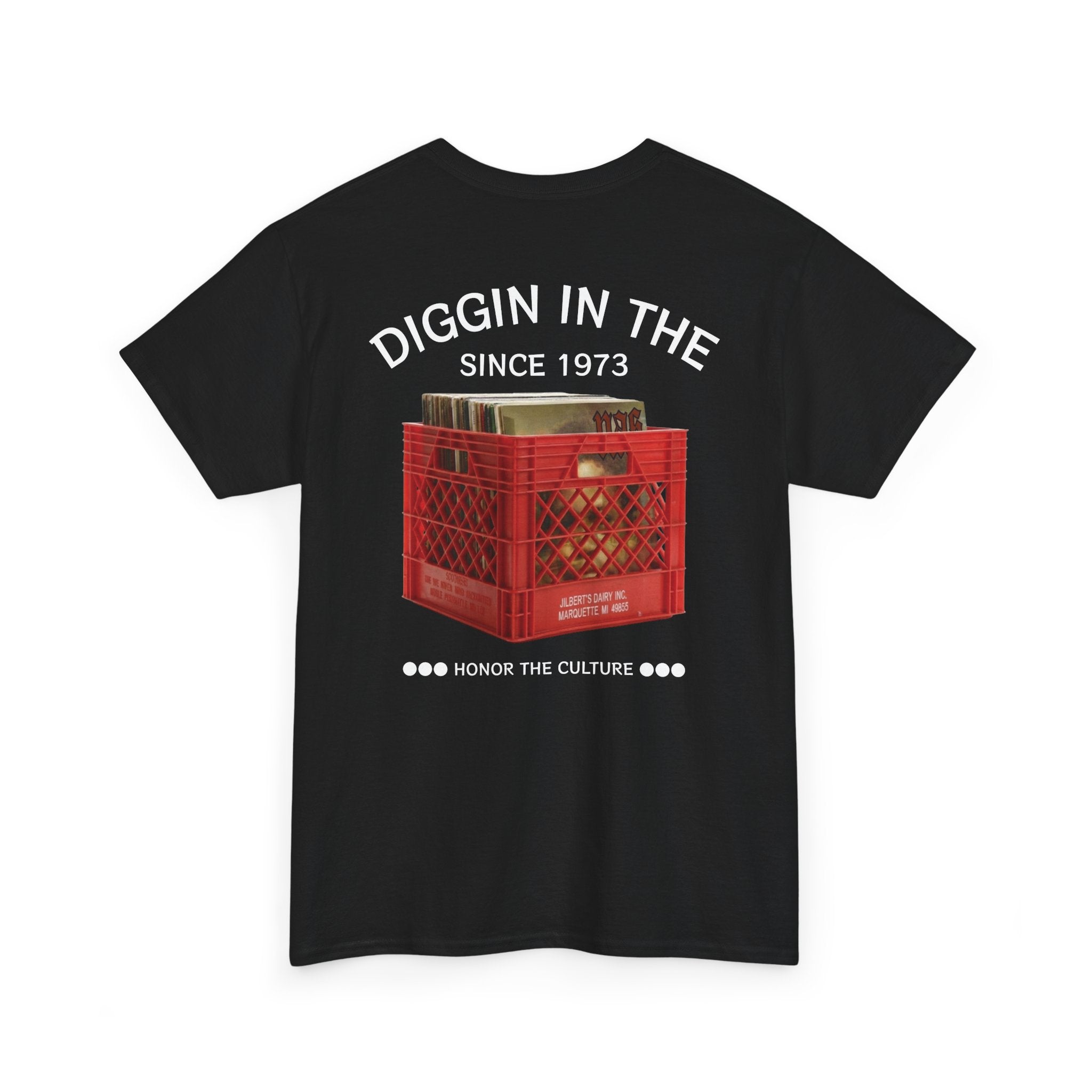
NPR journalist Tom Terrell called them "the most influential DJ/MC combo in contemporary pop music, period." That is not hyperbole. It is a factual assessment of what four studio albums between 1987 and 1992 did to the architecture of an entire genre. Eric B. brought the excavation — the crate-digging, the sample construction, the beat architecture that perfectly scaffolded Rakim's verse without ever competing with it. The contrast was described by critics as the record equivalent of Eric B. building his beats in a crowded nightclub while Rakim composed his lyrics quietly at home listening to jazz. Two entirely different modes of creation that arrived at the same frequency. The sync was total.
Released July 7, 1987 on 4th & B'way Records. Five singles: "Eric B. Is President," "I Ain't No Joke," "I Know You Got Soul," "Move the Crowd," and "Paid in Full." Its chart position — #58 on the Billboard 200 — tells you nothing about its cultural weight. MTV named it the greatest hip-hop album of all time in 2006. The opening line of the title track — "Thinking of a master plan / There ain't nothing but sweat inside my hand" — was described by critics as not just Rakim's coming-of-age story but the entire history of hip-hop compressed into two lines. The album went gold. Eric B. & Rakim signed to MCA for a reported $1 million, helping to usher in the commercial era of hip-hop itself.
If Paid in Full announced the revolution, Follow the Leader documented it in full. Peaked at #22 on the Billboard Pop Albums chart, certified gold. Released during hip-hop's golden age and received by critics as one of the most groundbreaking albums in the genre's history. American author William Jelani Cobb wrote that on the heels of Paid in Full, the hip-hop community received its new standard. Follow the Leader was the proof that it wasn't a coincidence. This was a philosophy of artistry, delivered twice in a row, without a single concession.
A record that the true believers regard as the most sonically sophisticated of the four — darker, more deliberate, leaning harder into Rakim's jazz-inflected cadences and more abstract Five-Percent philosophical content. The album title is itself a directive that describes exactly what Rakim had been doing since 1986: letting the rhythm do the work, trusting the ear to follow the architecture without being told where to look. The culture's most discerning listeners return to this record longest.
The fourth and final Eric B. & Rakim album, and the last record before the partnership dissolved over financial and legal disputes. Eric B., fearing abandonment as their MCA contract expired, refused to sign the release that would have allowed solo projects to proceed. The breakup sent Rakim into years of legal battles and courtroom navigation that kept one of the greatest MCs alive off records when he should have been at his commercial peak. He emerged on the other side unchanged in his craft. The legal machine bent around him. The bars did not.
Rakim does not require advocates. But the fact that every significant voice in hip-hop's history has voluntarily placed themselves in his congregation is itself a form of documentation. These are not polite industry compliments. They are confessions of influence by people who know exactly what they owe.
The legal battles with Eric B. and MCA kept Rakim largely off records from 1992 to 1997. His only notable solo output in that stretch was "Heat It Up" on the 1993 Gunmen soundtrack. The underground waited. The underground is patient when it comes to greatness. Finally, after years of court proceedings and label reorganization, a new deal with Universal brought the inevitable: the solo debut.
The 18th Letter arrived in late 1997 — debuting at #4 on the Billboard charts. The title referenced the eighteenth letter of the alphabet, R — as in Rakim, as in Ra, as in the return of something the culture had been quietly starving for. Early editions came packaged with Book of Life, a retrospective of the Eric B. & Rakim catalogue. The anticipation had been surprisingly high for a veteran rapper whose roots extended a decade back. It turned out, for the culture that cared most, the wait had only sharpened the hunger.
The Master followed in 1999. In that same year, Rakim appeared on three tracks of Art of Noise's The Seduction of Claude Debussy — a collaboration that placed him alongside one of electronic music's most critically regarded ensembles and underscored that his artistic reach extended well beyond the boundaries of any single genre. In 2001, came the most anticipated potential partnership in the history of rap music: Rakim signed to Dr. Dre's Aftermath Entertainment. The proposed album, Oh, My God, would have represented a summit between two of the most significant technical forces the genre had ever produced. Disagreements prevented its release — but not before Rakim appeared on Truth Hurts' "Addictive," which hit the Top 10 in 2002 — his first chart entry at that level since appearing on Jody Watley's "Friends" in 1989. He also appeared on Jay-Z and Dr. Dre's "The Watcher Part 2" and on Eminem's 8 Mile soundtrack with "R.A.K.I.M" — three of the biggest names in hip-hop invoking him by title and by presence simultaneously.
Every elite pen in history traces their lineage back to one man.
Named the greatest hip-hop album of all time by MTV in 2006. The album that broke the form open, introduced the world to internal rhyme, multisyllabic flow, and written verse as high craft. Nothing has been the same since.
About Mickey Mouse. The subject was a cartoon. The act of sitting down and turning experience into measured, intentional language was the practice that would change the world. He has never stopped doing it.
Every significant voice in hip-hop's technical tradition traces a direct line back to Wyandanch, Long Island, 1986. The influence does not diminish. It compounds. Every generation rediscovers him and is changed by the encounter.
In 2019, Rakim published Sweat the Technique: Revelations on Creativity from the Lyrical Genius — a book that gave the culture the rarest possible gift: the architect explaining the blueprints. How he thinks about a verse. How he builds a rhyme scheme. How the jazz of Monk and Coltrane lives inside his cadences. How the Five-Percent lessons shaped his philosophy of knowledge and language. The book is not just a memoir. It is a manual for what creative devotion looks like when it is practiced without compromise across an entire lifetime.
He has been nominated for the Rock and Roll Hall of Fame. The Source ranked him the greatest lyricist of all time. MTV ranked Paid in Full the greatest hip-hop album ever made. Eminem, who is himself ranked by many as the most technically proficient rapper in history, has spoken about Rakim with the reverence of a student. Nas — whose own debut album is regularly cited as the greatest solo rap album of all time — named Rakim as a primary architect of what he was attempting. The entire technical tradition of hip-hop lyricism flows through one body of work from Wyandanch, Long Island, released between 1986 and 1992.
What makes Rakim's legacy genuinely singular — beyond the innovations, beyond the critical rankings, beyond the endorsements of every peer and successor — is that none of it was calculated. He was skeptical about rap when Eric B. found him. He wrote his rhymes sitting down to jazz because that was how he heard music. He never raised his voice because he didn't need to. The God MC did not design his impact. He simply brought the full weight of his truth, his training, and his discipline to the microphone, and the culture was permanently changed by the encounter.
There is hip-hop before Rakim and there is hip-hop after Rakim. Every MC who has ever picked up a pen and tried to say something real carries a debt to Wyandanch, Long Island — whether they know it or not.
When we talk about Rakim's accomplishments, we aren't just listing platinum plaques or his placement at the apex of every credible "Top 50 MCs of All Time" list. His true achievement is linguistic. Albums like Paid in Full and Follow the Leader didn't just sell records; they minted an entirely new vocabulary for rhythm and poetry. He took a localized party trick and elevated it into a global literary science.
You cannot study physics without Isaac Newton, you cannot study jazz without Miles Davis, and you absolutely cannot study hip-hop without Rakim. He is the prime meridian of lyrical execution. To the culture, he represents the moment the art form grew up, demanded to be taken seriously, and set a standard that has never been surpassed.
William Michael Griffin Jr. wrote his first rhyme at seven years old about a cartoon. He adopted the name of the sun god, the ancient land, and the word for writer. He walked into a Queens studio at eighteen and reinvented the wheel. He never raised his voice. He never broke a sweat.
To the culture, Rakim is the Rosetta Stone. Untouchable, unquestioned, and infinitely essential.
The Music Made Him Eternal · Rakim Allah · The God MC











Leave a comment
This site is protected by hCaptcha and the hCaptcha Privacy Policy and Terms of Service apply.